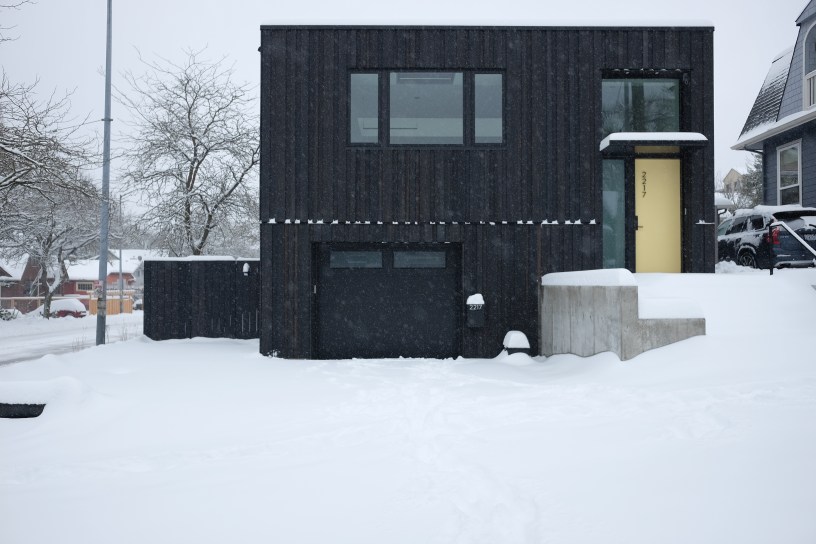
One of the things I eliminated from the project early on was the radiant heat system for the concrete floor downstairs. A recent snowstorm made me reflect on that decision.
When I made the decision in the fall of 2018, as potential builders were preparing bids for the project, my primary consideration was the cost relative to the benefit I thought I would get out of it. I almost always wear flip-flops at home, and I didn’t want to pay for something I wouldn’t appreciate much. By eliminating the radiant heat system, the combination boiler and tank included in the bids could be replaced by a tankless hot-water system, reducing the project’s HVAC costs by a third, or nearly two percent of savings in the total project cost. That may not sound like a lot, but as I was looking for ways to reduce the project cost–and often discovering how little room there was, or else what I would have to give up to save on cost–radiant heating for the concrete floor ended up on the chopping block. Still, it wasn’t an easy decision.

Not counting the laundry-mudroom, where I don’t spend much time, there are two rooms downstairs. One is my office, where I spend weekdays in, plus occasionally weekends too when I’m on my computer. The HVAC keeps it sufficiently warm, though I still need to fully program the smart thermostat. I’m usually in my shoes in there, so I hardly experience the concrete floor directly. My dog does, however, and I’ve noticed that he likes to nap on his shaggy mat when we’re in there. He lays on the concrete from time to time, but usually he’s lounging on his mat. The other room has a sofa bed for guests, a wall-mounted TV, and an accent wall painted in dark navy. I usually end up there at the end of the day, just before bed, catching up on my video streaming with a glass of whisky. It’s so cozy I sometimes end up spending the night on the sofa bed instead of dragging myself to bed upstairs. I call the room the “snug.” My dog also likes to snuggle when we’re in there, though I suspect that has more to do with the TV sometimes freaking him out than with the temperature of the floor.
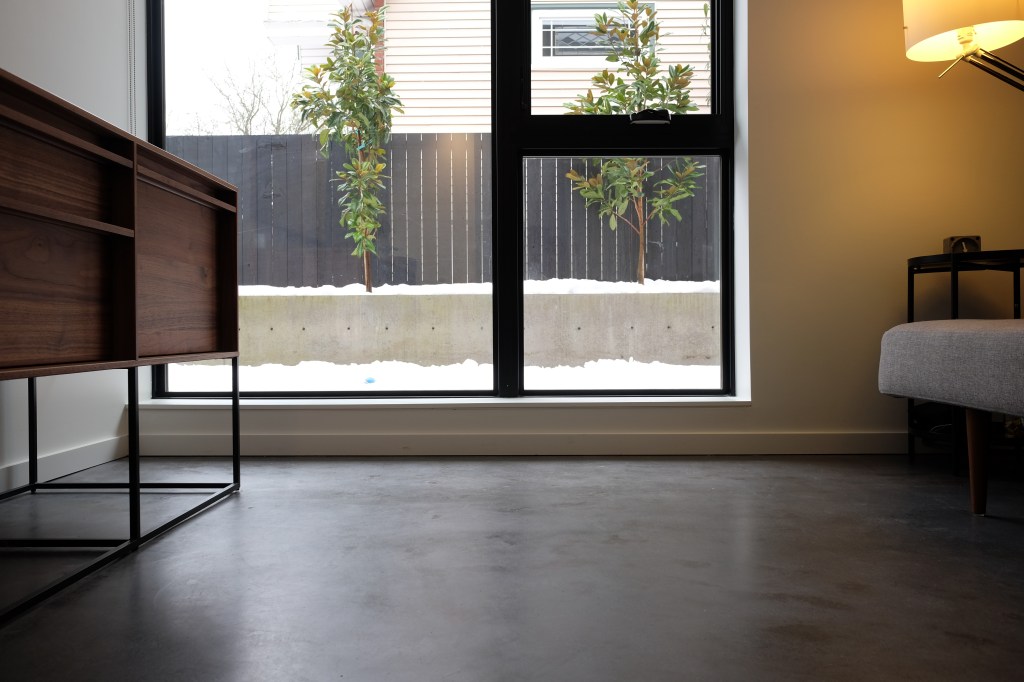
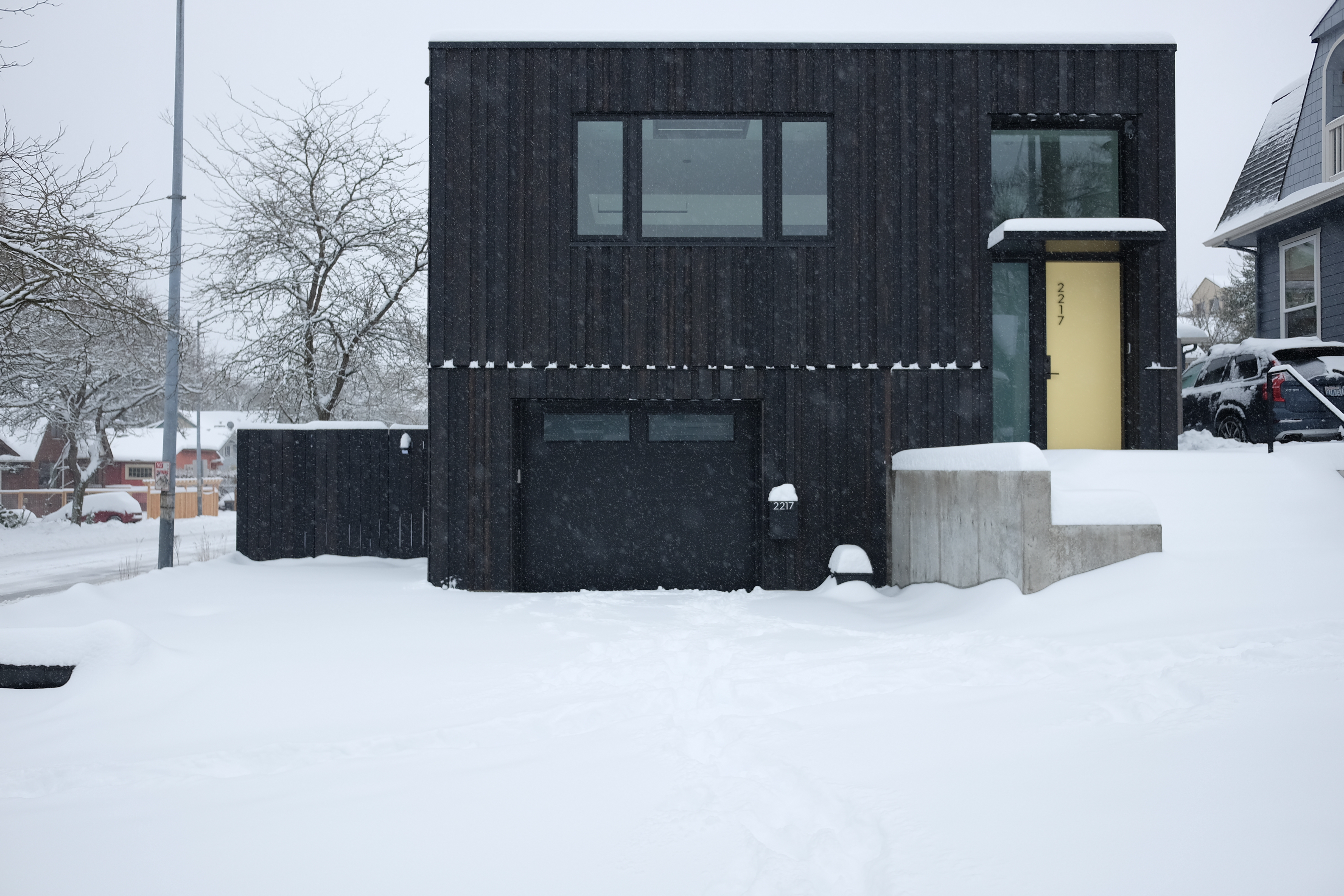
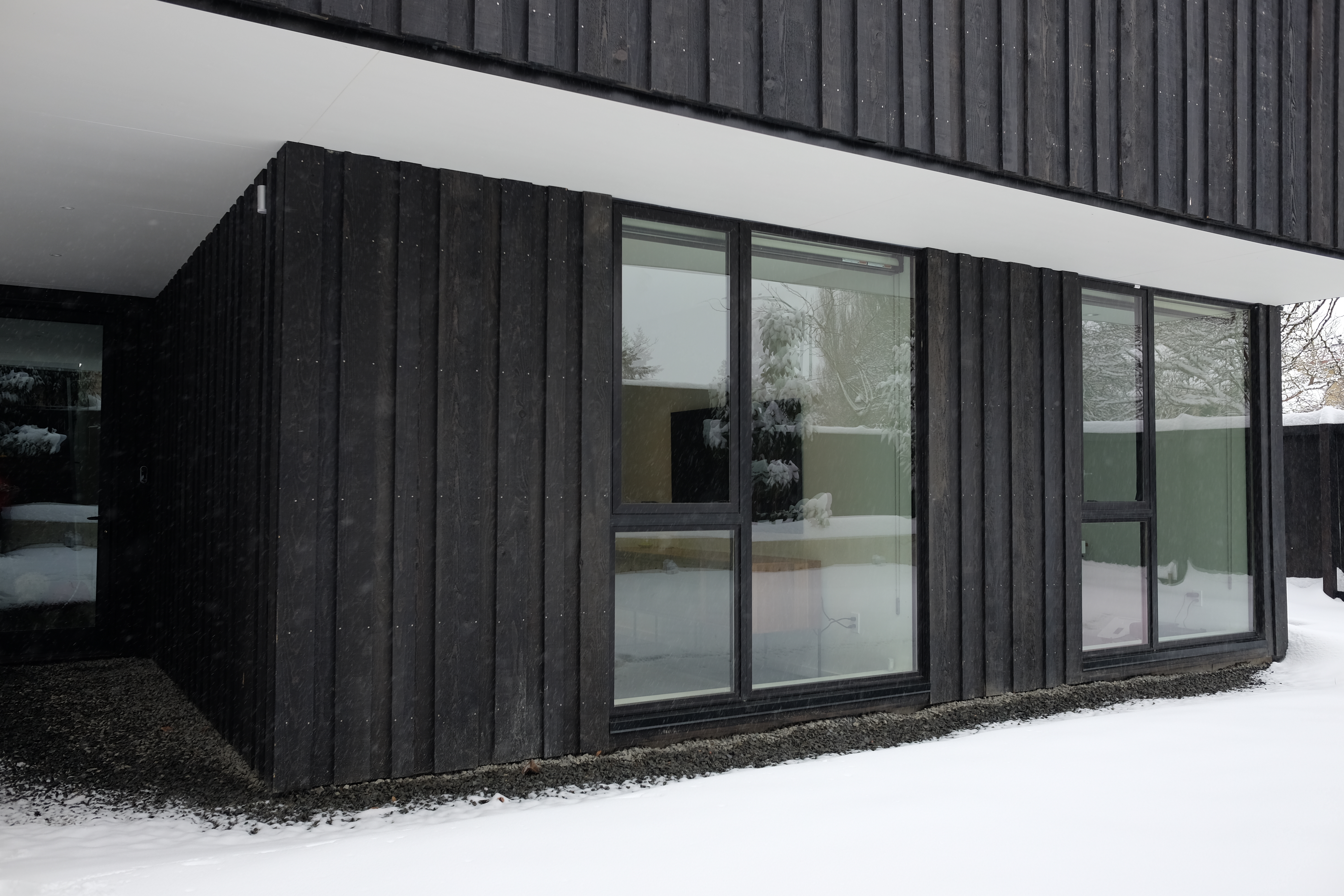
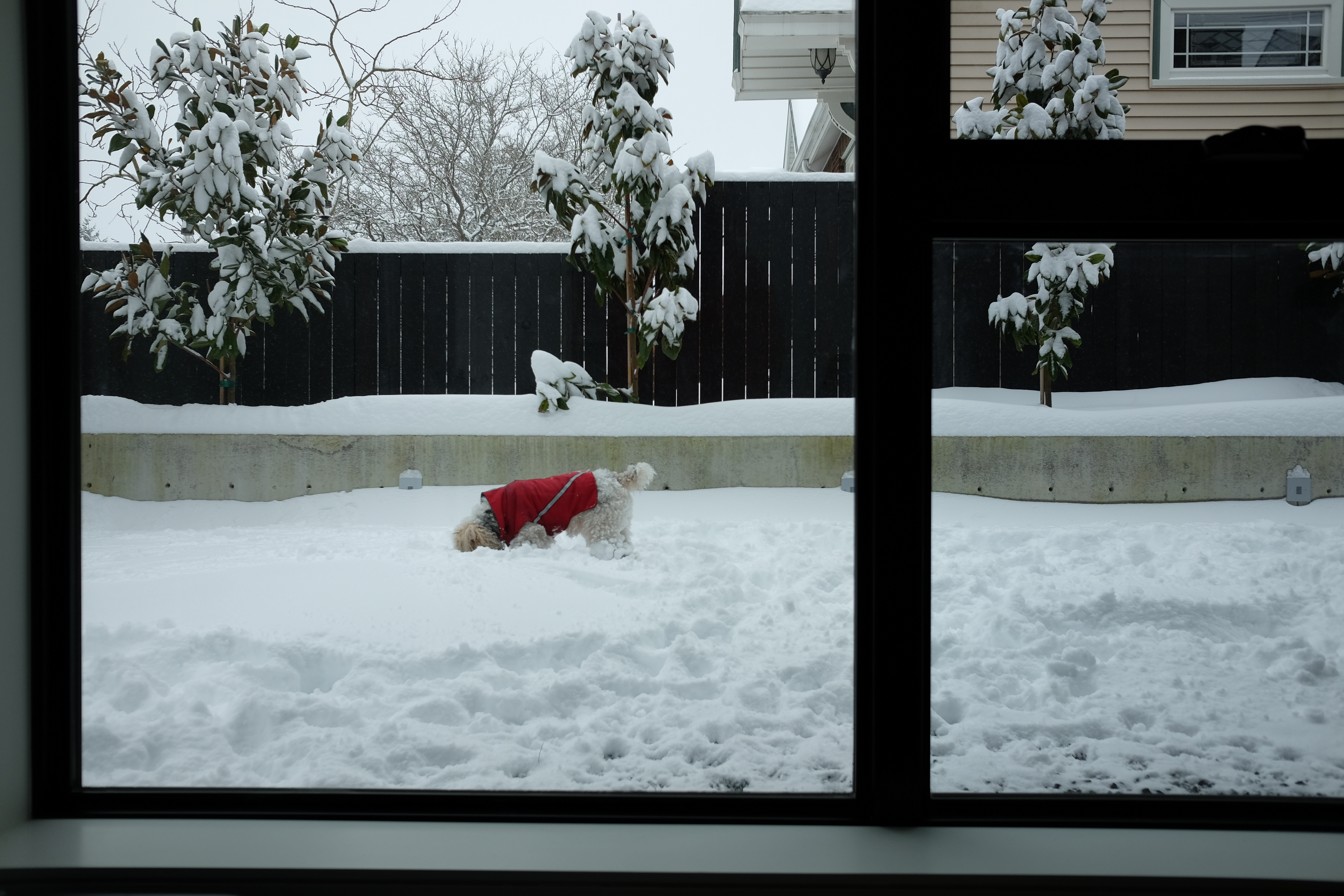
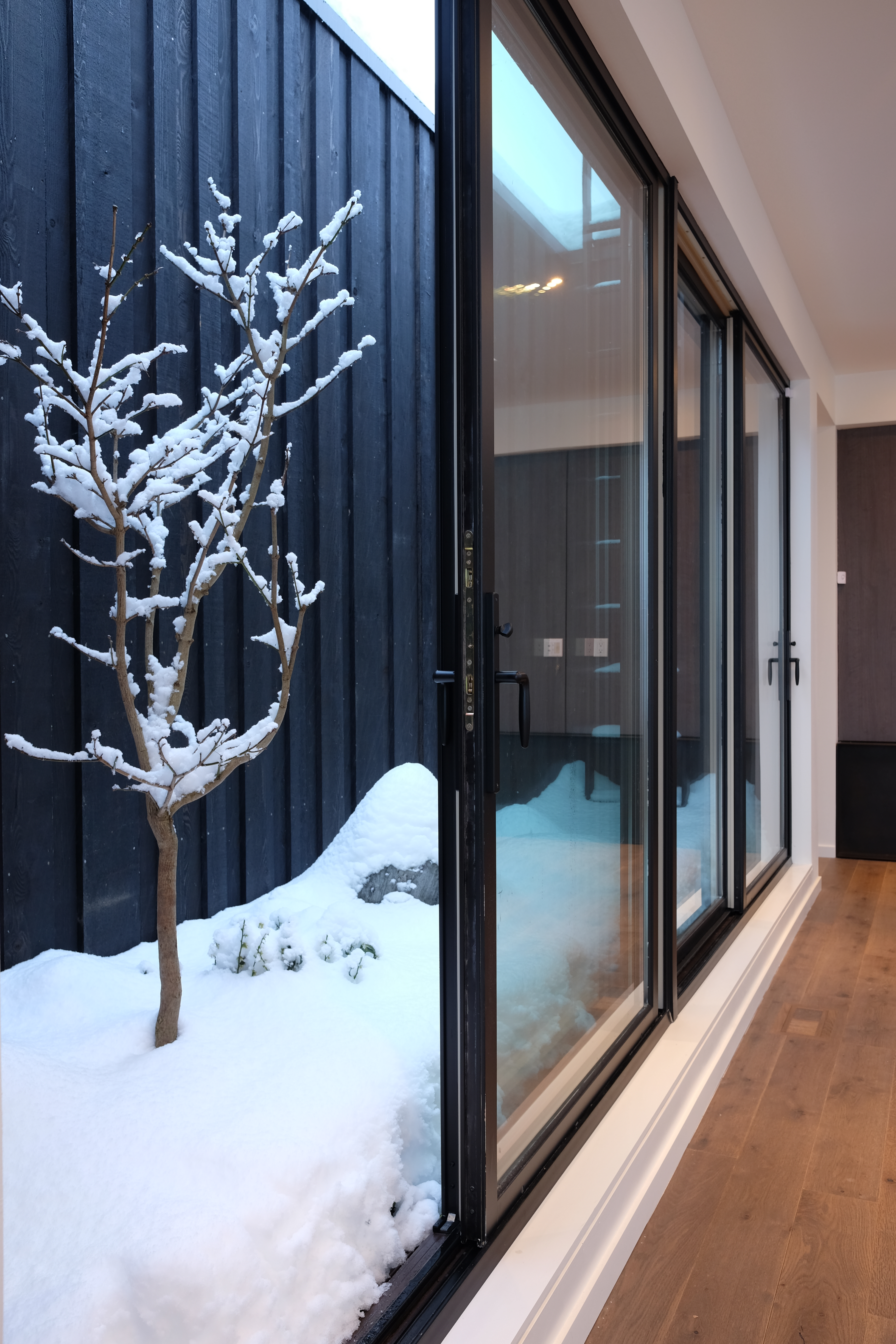
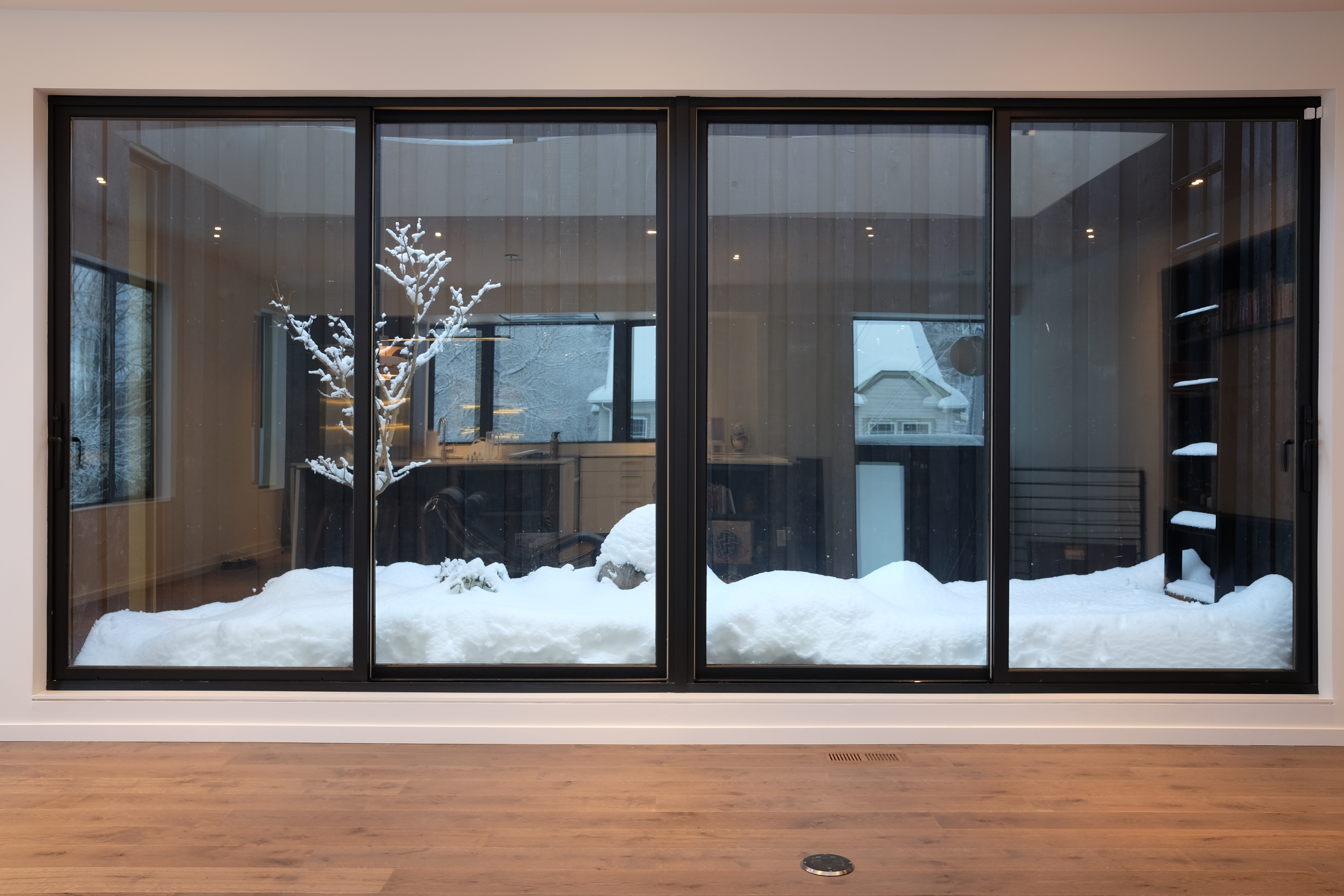
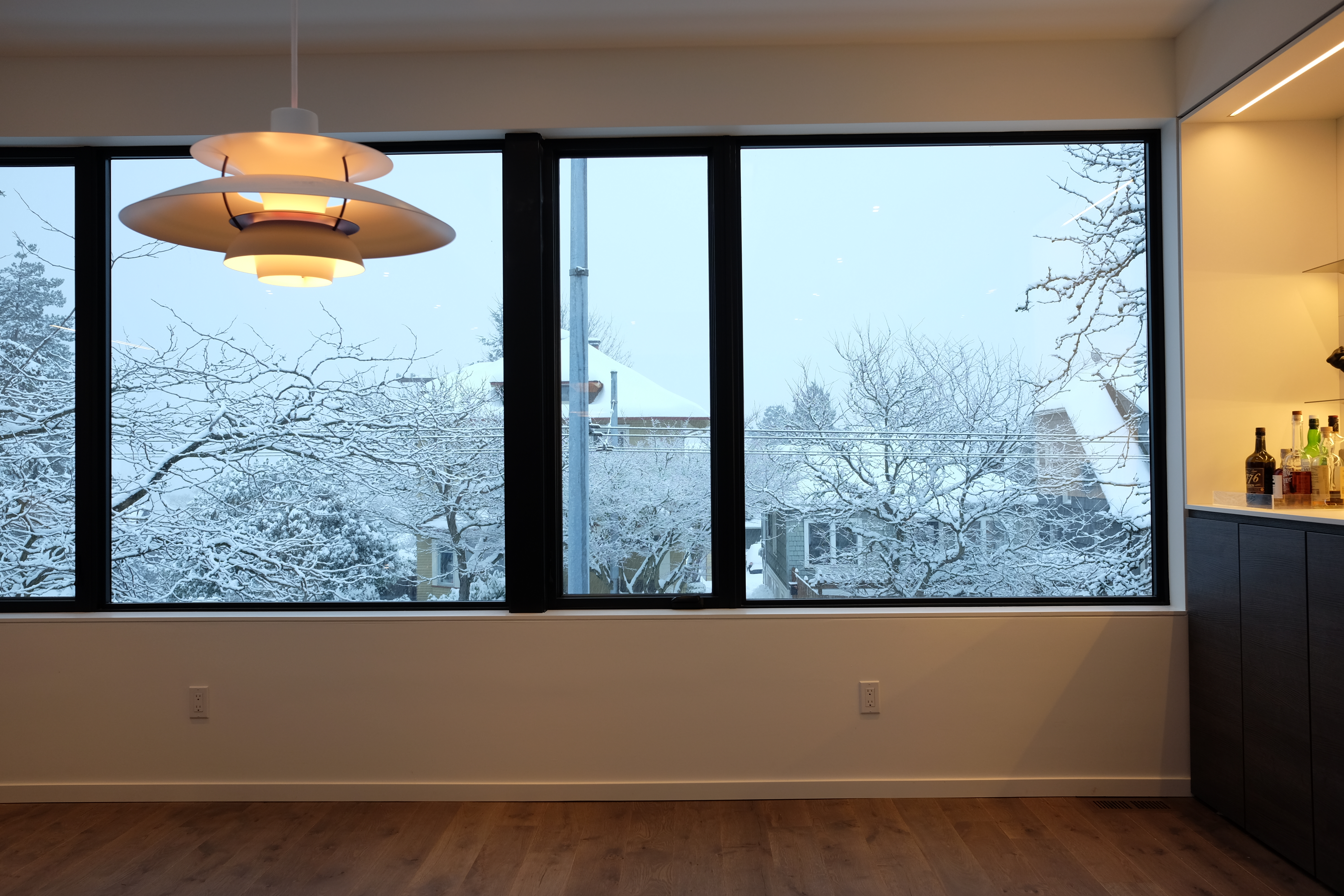
Even though I almost never feel it with my bare feet, the unheated concrete floor bugs me from time to time, as I wonder how the choice I made two years ago would impact the value of my home, should I ever decide to sell it years from now. Although it rarely gets below freezing here during the winter, it did in February, turning what would have fallen as rain into almost a foot of snow. Not only did that allow me to see my new home under a blanket of white (see photos below), it also prompted me to start gathering data. Equipped with a kitchen infrared thermometer and a Bluetooth-enabled temperature sensor ($12 on Amazon), I’ve been taking measurements of the floor temperature, starting on the day of the snowstorm. The good news is that the floor temperature appears to stay well above the outside temperature. The bad news is that the floor is typically several degrees cooler than the room temperature, unless it’s sunny outside and I have the window shade drawn. Under direct sunlight, the concrete heats up to over 70 degrees; otherwise it’s usually in the mid-60s, regardless of the temperature outside. It helps that the two downstairs bedrooms are south-facing, allowing them to catch all the sunlight there is. Unfortunately, we don’t get many sunny days here in the winter.
The decision I made two years ago is now–quite literally–cast in concrete. Time will tell whether it was a wise or foolish one. Meantime, I’ll be taking more temperature readings of the concrete floor this summer.

 The Bespoke Home