
Site preparation, shoring & stormwater control
After an almost two-year wait from when I purchased the property, construction finally began in the summer of 2019. The builder cleared the overgrown hedge that was on the site and put up silt fencing, erosion barriers and filters to protect the surrounding area during construction.
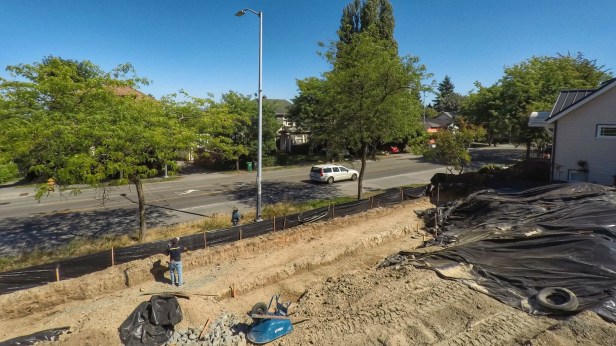
Because the site elevation drops by seven feet from west to east, the first concrete to be poured was for a retaining wall along the east side.
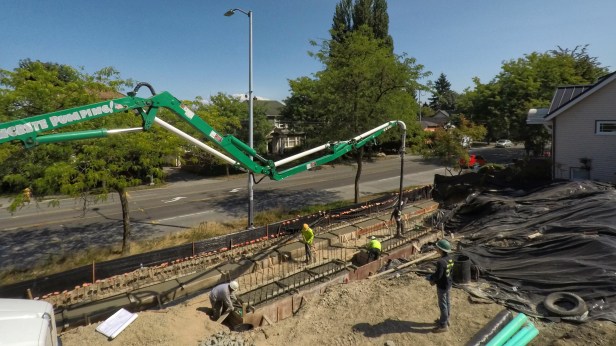
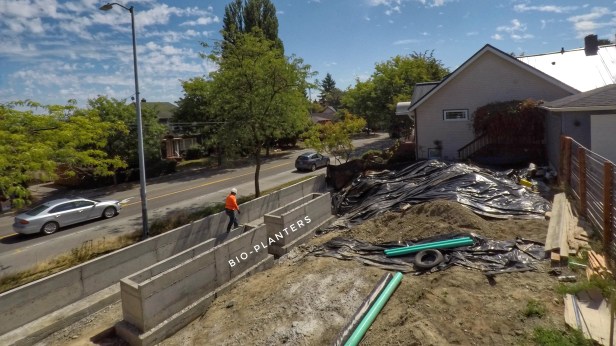
The city required two bio-retention planters for stormwater control (shown in the photo below). Pipes will route run-off from the roof and yard into the bio-planters, where it will be absorbed by bio-retention soil and plants. When the planters are full, overflow pipes will discharge excess run-off into the city’s drains. Though the planters will take up some space, the side yard will still be about seven feet wide. The elevation of the yard will rise to a few inches below the top of the planters, which should reduce the visual and physical space taken up by the planters.
Temporary fencing vandalized
The most visible section of concrete, facing the sidewalk, turned out to be smoother and better looking than I expected. Thank goodness it was the temporary fencing that was spray painted with graffiti, rather than the concrete wall. I received a letter from the city to immediately remove the graffiti to discourage further vandalism, which the builders promptly did. The architect recommended a spray-on solution that would make graffiti easy to remove from concrete, which we plan to apply.
Excavation & laying of foundation
With the east retaining wall and bio-planters in place, the site was excavated for the foundation and retaining walls on the south and west sides.
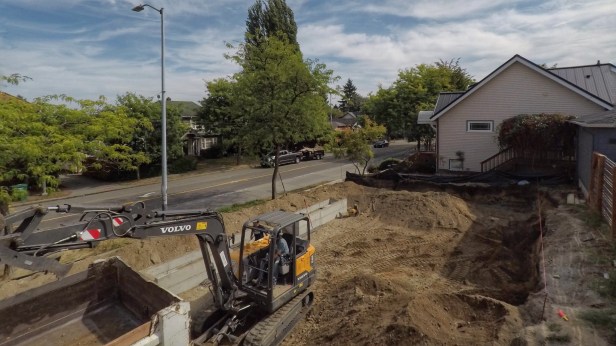
After the footings and retaining walls were formed, the site was filled with soil and gravel.
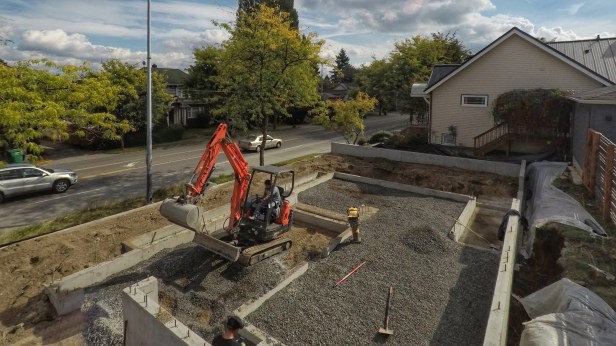
Then ground level drain pipes were positioned…
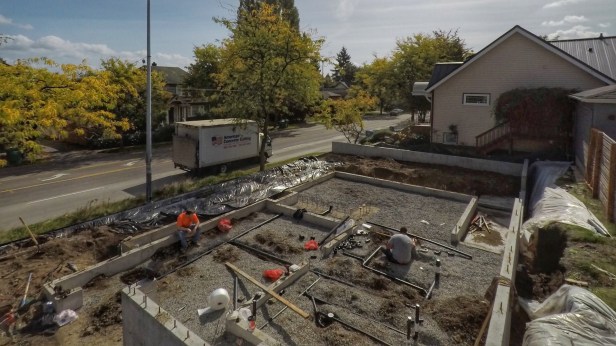
…followed by insulation. The garage floor will not be insulated. I also decided early to forgo in-floor heating in order to save on cost, opting for a mini-split HVAC system instead. I wear flip-flops at home so I think I can live with a cold floor on the ground level.
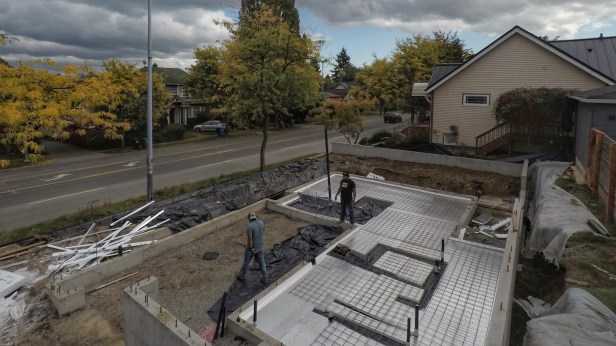
A few days later, the slab foundation was poured.
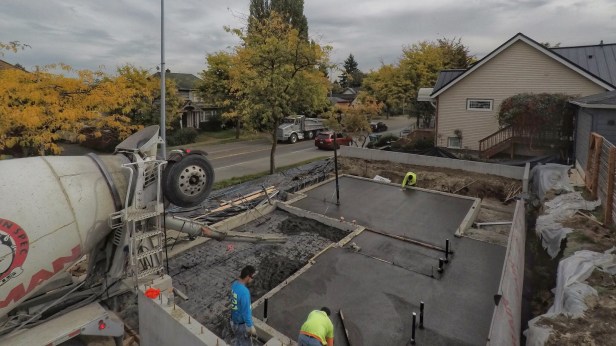
Because the concrete mixer didn’t arrive till the afternoon, the builders had to work past sunset to make sure the ground floor was level.
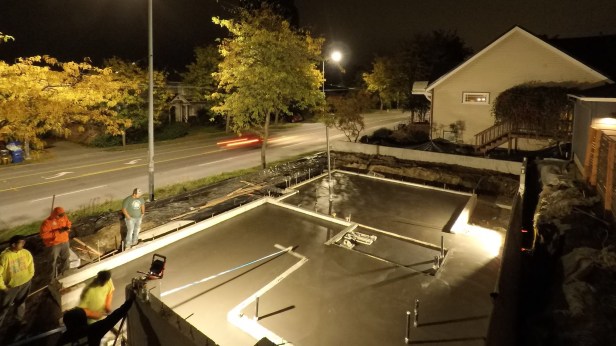
The architect chose the dark color of the concrete floor, which I’m excited about.
 The Bespoke Home